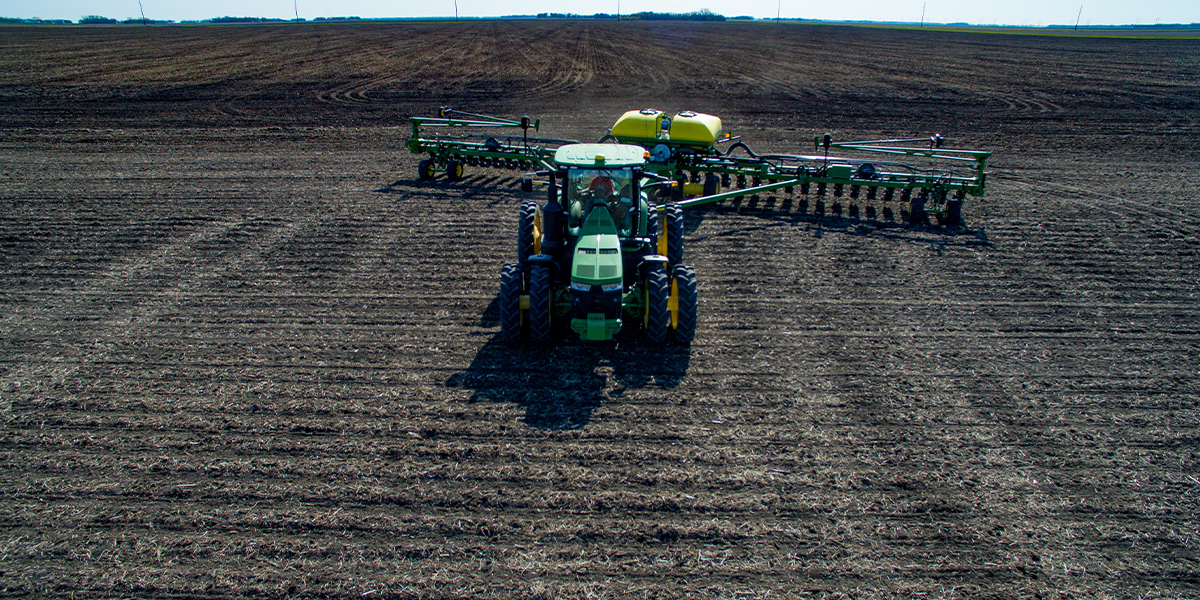
There’s the old saying in the Northern Plains of “If you don’t like the weather, just wait until tomorrow.” That rang true here in the spring of 2026 and the “false” springs that have accompanied it. However, things are heating up and if all goes well, it could give some growers a chance to be in the fields in just a few weeks.
“We had about five to six inches of snow in this last round, but within a few days it’s 70 degrees, so everything should pretty well be gone,” said Northern Soy Marketing (NSM) Vice Chair David Struck. “A lot of the times we don’t get into the field until mid-April, but we’re pretty dry so with some warm days and a little bit of wind it’s possible we get rolling by the first of April.”
Struck, who farms in central South Dakota, has missed a lot of the winter precipitation that has hit all around him. He is expecting to start off the year on a dry note as even the biggest snow event won’t be of much help toward adding some moisture to the soil.
“We’ll take anything we can right now, but I’d rather it be rain as that at least stays put,” Struck said. “When the snow comes with 50 mph winds, it just blows across the field and ends up in the ditches anyways.”
To the east in west-central Minnesota, the snow is also now gone, and temps are slowly but surely warming the soil. Paul Freeman, who serves as a director on the Minnesota Soybean Research & Promotion Council, a founding partner of NSM, says he’ll keep watching the soil temps and other indicators to let him know when to hit the fields.
“General rule of thumb in this part of the state is that when the ice goes out on the big lakes, it’s time to get rolling,” Freeman said. “Calendar plays a role too, because even if it’s still cold but we’re getting into May, we need to get going because at that point we know it will warm up eventually.”
Freeman is also happy with where his fields are sitting for moisture at the moment.
“We had a pretty normal winter, but we were sitting pretty good on moisture last fall, so pretty optimistic for where we’re at as far as moisture for this spring,” Freeman said.
The shop at the Struck farm has been busy getting equipment ready and moving grain, but all the planting equipment is good to go once the fields are. The secondary equipment for applying fertilizer and spraying weeds is next on the to-do list. There is a lot of uncertainty when it comes to things such as fertilizer and fuel costs this year, but he notes being proactive and locking those prices in will help.
“Inputs are out of control, but we’re locked in so it’s not a major concern for us, but if you have to buy some at the tail end, it could be interesting,” Struck said. “Chemicals stay pretty stable, but fuel’s going to be a wild card this year.”