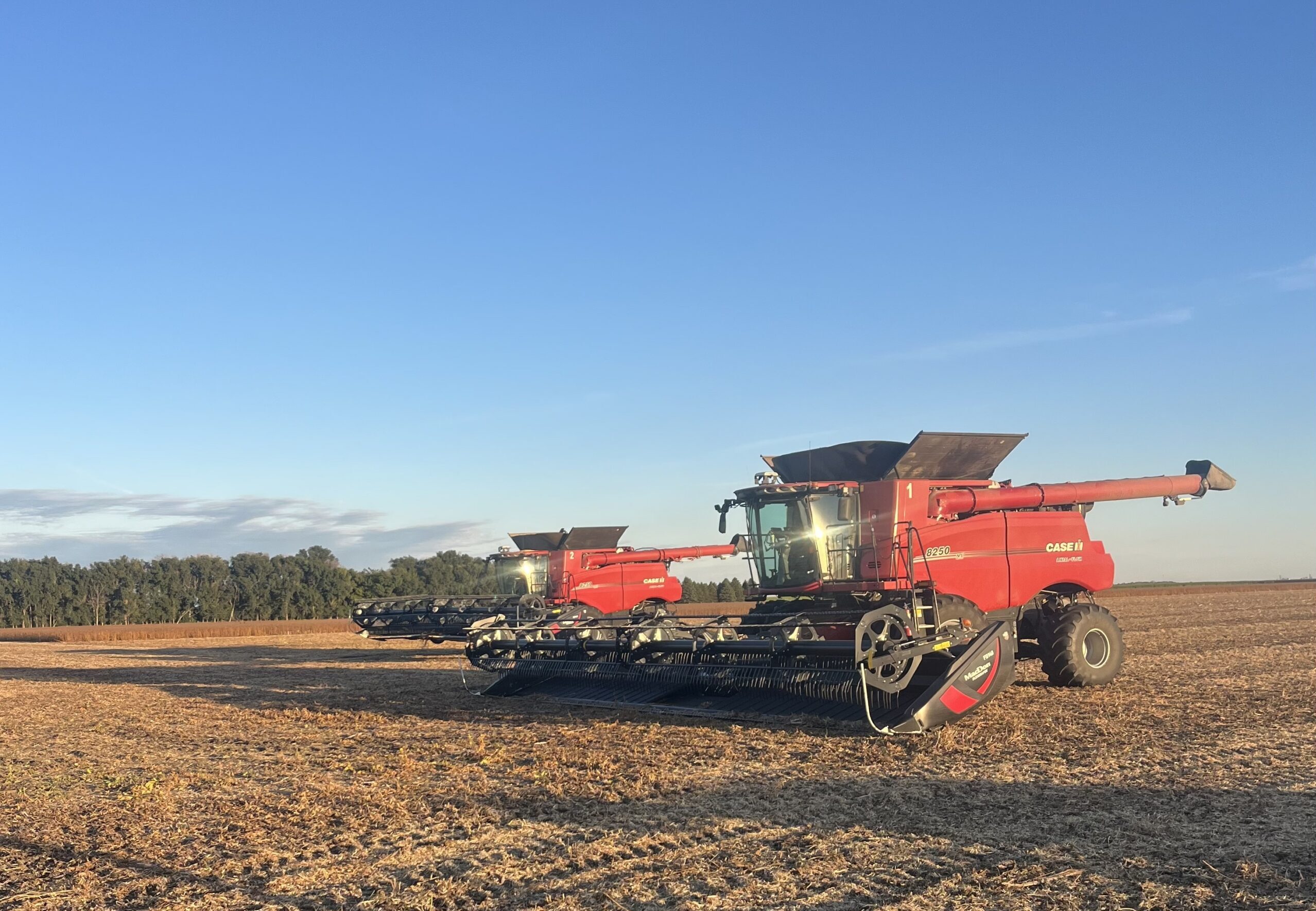
An uneventful harvest in the Upper Midwest will make for excellent quality beans as they make their way around the world. Northern Soy Marketing (NSM) producers in Minnesota and South Dakota wrapped up their soybean harvest in mid-October before moving on to other crops and needs around the farm. While moisture was adequate during the growing season for most, which led to good yields, drier conditions did persist in parts of South Dakota and northwestern Minnesota. However, the harvest conditions themselves were great for southeastern Minnesota farmer and NSM board Chair Glen Groth.
“Minimum breakdowns, yields were favorable and everything went good,” said Groth. “No excessively dry or excessively wet beans so that will ensure very good quality as they get shipped internationally.”
On a scale of 1-10, with 10 being the best, Groth rates this year’s soybean harvest about an 8.5 in regard to overall crop quality and yield thanks to a pleasant end to the growing season.
“We just had a good natural dry down, and it wasn’t a situation where we had a lot of constant rain throughout the end of the season, which can lead to soybean sprouting and deterioration of quality,” said Groth. “Some other parts of the Corn Belt may have experienced that, but we were very fortunate where we were at.”
On the Carson Stange farm in northeastern South Dakota, they too were blessed with enough rain during the growing season and dry fall conditions to bring a good-yielding and high quality crop to the bins.
“We were pretty fortunate in our area that our soybeans turned out really well, but there were a lot of variations. Throughout the state and even 20 miles from our farm is a little different story,” said Stange, NSM board member. “Overall average or a little above average for our soybeans.”
Stange adds that they experienced less disease and weed pressure this year as well.
“We didn’t see white mold this year like we usually do as we had that hot and dry week which is normally timed perfectly for white mold pressure,” Stange said. “Fields stayed pretty clean, but it wasn’t too wet, so I think everyone was able to get out and make a second pass for spraying.”
Both Stange and Groth are busy staying on top of their end of field work, including finalizing tillage and putting fertilizer down for next year’s crop before winter meeting season starts. But the fun isn’t over until the cows come home.
“Right now we’re trying to get some field work done and work on getting the cows home and the calves worked and weaned,” said Stange, as the sound of cows mooed in the background.