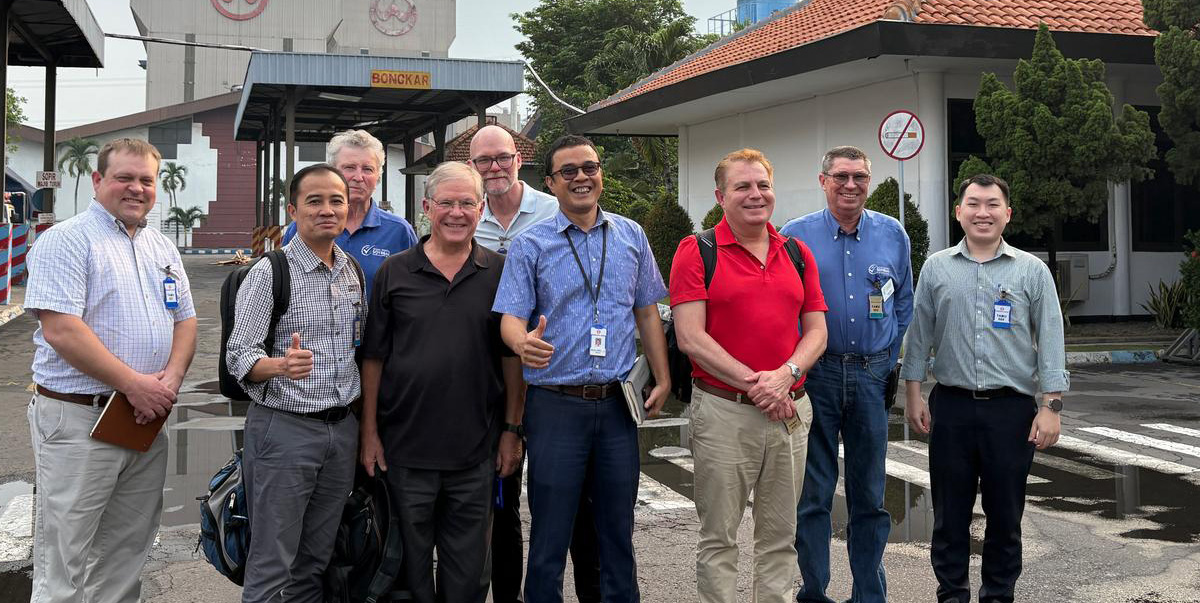
Good business is built on strong relationships. Northern Soy Marketing is headed to Southeast Asia in early 2027 to continue to develop relationships and build business with two important and growing soybean markets, each with their own unique needs. NSM delegations comprising farmer leaders, soybean and livestock nutrition consultants and a soymeal trader will travel to Indonesia in early February and Thailand in March for trade missions.
“I’m excited to go international and meet with our customers, get a better understanding of their needs and how we can meet those needs,” said Glen Groth, NSM board chair.
Indonesia currently has the biggest growing economy in Southeast Asia, due in part to a fast-growing population and stable economic growth. Their annual soybean imports are steady at just over 2.5 million tons per year, while soybean meal demand has grown by more than 1.5 million tons over the past seven years.
“It’s a combination of high-demand for food-grade beans and a high demand of soybean meal for a growing population that wants more protein in their diet,” said Groth, who has twice visited Indonesia on previous trade missions. “It’s a unique trade mission where we will focus on both those things versus where we usually focus on just the soybean meal. It’s a unique country with different needs and different tastes as far as soybeans go.”
Currently, 95% of Indonesia’s soy food consumption comes from the United States, but there is much room for soybean meal export growth for use in poultry and aquaculture.
Thailand, which imports 99% of its soybean meal from other countries, also offers plenty of room for growth for the U.S. as well. They currently import approximately 3 million metric tons (MMT) of soybean meal and 4 MMT of whole soybeans, but only about 5% of that comes from the U.S.
“We don’t have a ton of market share in Thailand currently, but we hope to change that as they understand our quality,” Groth said.
A recent trade agreement announced between the U.S. and Thailand would reduce tariffs between the two countries and likely lead to more soybean imports from the U.S. and strengthen the relationship with Thailand. Relationship–building is a key component to these upcoming trade missions.
“Relationships are something that you can’t buy with money,” Groth said. “We’re both wanting to help understand the value proposition that northern–grown soybeans offers and we want them to understand the sustainability message that we present. At the same time we want them to meet the farmers and understand the people working to provide them with those soybeans and that’s something that’s hard to put a dollar figure on, but we know is greatly appreciated.”
With quality and sustainability being of importance to these growing markets of Indonesia and Thailand, Groth says that falls right in line with the values of NSM.
“We have a cool climate, therefore our soybeans are stored right up until the sale in cool conditions, which leads to better quality,” said Groth. “Also, transportation-wise, we have infrastructure in place to get soybeans out of the PNW to those other countries in a timely and efficient manner. And then finally just overall quality of our protein, our amino acid profile, which provides greater value for our soybeans versus those found in other parts of the world.”
While the trade missions might mean more time away from family during what is normally an already very busy winter meeting season for NSM board members, Groth says the international visits provide valuable insight for farmer leaders and are important for growing relationships with soybean purchasers.
“I love being able to see other parts of the world, learning about other cultures and understanding more about how our customers live and what their unique needs might be,” Groth said. “It’s something I really enjoy.”